
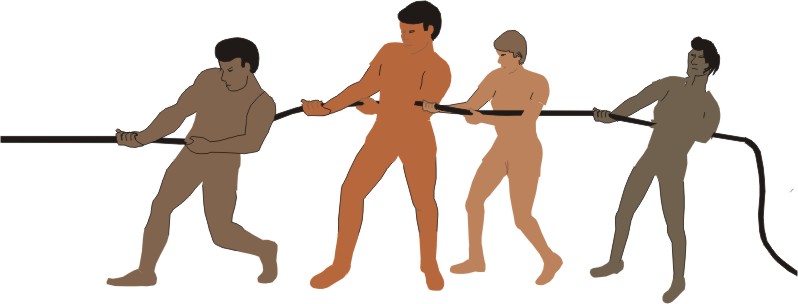
18 Woe to those who drag iniquity with the cords of falsehood,
And sin as if with cart ropes;
19 Who say, “Let Him make speed, let Him hasten His work, that we may see it;
And let the purpose of the Holy One of Israel draw near
And come to pass, that we may know it!”
20 Woe to those who call evil good, and good evil;
Who substitute darkness for light and light for darkness;
Who substitute bitter for sweet and sweet for bitter!
21 Woe to those who are wise in their own eyes
And clever in their own sight!
22 Woe to those who are heroes in drinking wine
And valiant men in mixing strong drink,
23 Who justify the wicked for a bribe,
And take away the rights of the ones who are in the right!
And sin as if with cart ropes;
19 Who say, “Let Him make speed, let Him hasten His work, that we may see it;
And let the purpose of the Holy One of Israel draw near
And come to pass, that we may know it!”
20 Woe to those who call evil good, and good evil;
Who substitute darkness for light and light for darkness;
Who substitute bitter for sweet and sweet for bitter!
21 Woe to those who are wise in their own eyes
And clever in their own sight!
22 Woe to those who are heroes in drinking wine
And valiant men in mixing strong drink,
23 Who justify the wicked for a bribe,
And take away the rights of the ones who are in the right!
The last of the six woes come in today's passage of Isaiah 5. They read like proverbs, and, not surprisingly, many of the cross-references for our verses do link back to the Book of Proverbs. They are pretty self-explanatory, as one would expect a proverb to be. Appreciating the punch and poetry of Isaiah!....
- Woe #3 (vs 18): Useless flaunting with brazen mocking
The visual imagery is terrific. While a cord of three strands is not quickly broken apart (Ecclesiastes 4:12), a cord of falsehood (worthlessness; uselessness; vanity, in other translations) is snipped with ease.
"The Lord is righteous; He has cut in two the cords of the wicked."
--Psalm 129:4
Judah is not only characterized as being blatantly sinful, but it has made great effort, as dragging something of weight and heft, to make sure its sinful lifestyle is being maintained--for all to see! As if their pursuit of sin is not enough, the people do so mocking God with every step. Look at verse 19: "...Let the purpose of the Holy One of Israel draw near...." That name for God that Isaiah has used and will use in his prophecy is here used as if by a taunting "I-dare-ya" grade-schooler. "You've got judgment for us? Bring it on!" Guess they forgot about what it says in Deuteronomy 6--what our Lord later quotes in the Gospels--about putting God to the test. Not sure those thoughts aren't still out there.
Sometimes [OK, a lot of times!], when I'm cooking, I will have to make a change in the recipe I'm following. That item I thought was in the pantry, fridge or spice rack just isn't there when I reach for it. Time for a last-minute substitution [or deletion!] There are times when you can whip up missing ingredients from other sources or else choose to alter your dish's flavor profile with something different. And, then, there are times when you make an ingredient substitution and you just get it wrong! It's not just distasteful--literally. It's more likely trash-bound. This is God's point.
When you "call evil good and good evil," you get it wrong! It's not just confusing, it's what Proverbs 17:15 calls "an abomination to the Lord." To how many things can we look at in our society today and apply this thought? Something that was once an "evil" that, over time, with insistent persuasion and re-framing (as if "dragging iniquity with cords of falsehood," perhaps?) has become something perfectly acceptable?
Judah's spiritual blindness had led the nation into a dark period of its history, indeed!
If my Mom is reading today, she is nodding her head up and down, with maybe even a little "uh-huh" thrown in. I do, now, understand about this, being a parent myself. We spend our lives learning--actively or passively, well or not so much. But it is over the entire course of our lives. Yet true wisdom is not something we can inherit or pursue on our own.
Bottom line: We fall short! Surprise--not. Our best reasoning is not good enough to be considered wisdom. We just don't have it all. But, God's people thought they were wise enough to think and to stand for themselves. We all get caught up in the deception that we can be wise on our own, yet, enough living in the world will show you how "useless" this thinking is. Just not smart! Love how Matthew Henry put it in his commentary: "...They think themselves able to disprove and baffle the reproofs and convictions of God’s word, and to evade and elude both the searches and the reaches of his judgments; they think they can outwit Infinite Wisdom and countermine Providence itself." Back to the hits of 1979....
"Know this first of all, that in the last days mockers will come with their mocking, following after their own lusts, and saying, 'Where is the promise of His coming? For ever since the fathers fell asleep, all continues just as it was from the beginning of creation.'"
--II Peter 3: 3 and 4
- Woe #4 (vs 20): Ill-thought substitutions
Sometimes [OK, a lot of times!], when I'm cooking, I will have to make a change in the recipe I'm following. That item I thought was in the pantry, fridge or spice rack just isn't there when I reach for it. Time for a last-minute substitution [or deletion!] There are times when you can whip up missing ingredients from other sources or else choose to alter your dish's flavor profile with something different. And, then, there are times when you make an ingredient substitution and you just get it wrong! It's not just distasteful--literally. It's more likely trash-bound. This is God's point.
When you "call evil good and good evil," you get it wrong! It's not just confusing, it's what Proverbs 17:15 calls "an abomination to the Lord." To how many things can we look at in our society today and apply this thought? Something that was once an "evil" that, over time, with insistent persuasion and re-framing (as if "dragging iniquity with cords of falsehood," perhaps?) has become something perfectly acceptable?
"'The eye is the lamp of the body; so then if your eye is clear [healthy, sincere], your whole body will be full of light. But if your eye is bad, your whole body will be full of darkness. If then the light that is in you is darkness, how great is the darkness!'"
--Matthew 6: 22 and 23
Judah's spiritual blindness had led the nation into a dark period of its history, indeed!
- Woe #5 (vs 21): "Wise in their own eyes"
If my Mom is reading today, she is nodding her head up and down, with maybe even a little "uh-huh" thrown in. I do, now, understand about this, being a parent myself. We spend our lives learning--actively or passively, well or not so much. But it is over the entire course of our lives. Yet true wisdom is not something we can inherit or pursue on our own.
"Let no man deceive himself. If any man among you thinks that he is wise in this age, he must become foolish, so that he may become wise. For the wisdom of this world is foolishness before God. For it is written, 'He is the one who catches the wise in their craftiness'; and again, 'The Lord knows the reasonings of the wise, that they are useless.'"
--I Corinthians 18: 18-20
Bottom line: We fall short! Surprise--not. Our best reasoning is not good enough to be considered wisdom. We just don't have it all. But, God's people thought they were wise enough to think and to stand for themselves. We all get caught up in the deception that we can be wise on our own, yet, enough living in the world will show you how "useless" this thinking is. Just not smart! Love how Matthew Henry put it in his commentary: "...They think themselves able to disprove and baffle the reproofs and convictions of God’s word, and to evade and elude both the searches and the reaches of his judgments; they think they can outwit Infinite Wisdom and countermine Providence itself." Back to the hits of 1979....
"What a fool believes he sees
No wise man has the power to reason away
What seems to be is always better than nothing
There's nothing at all but what a fool believes he sees...."
- Woe #6 (vs 22): "Drunkin' bribin' judgin'"
Don't drink and bribe! As if bribing a judge in and of itself was not enough of an issue, mix in impaired judgment to your bringing your bribe to a judge. It was working in Judah, and God had had His fill.
In all seriousness, there is quite a list of cases in which the rights of the righteous ones have been denied. How long, yes? How long.... There are hearts pained with grief, horror and bitterness over seeing righteousness "lose." Is this woe still "on the books"? Does God let righteousness lose? Though James repeats that the unrighteous "...have condemned and put to death the righteous man...." (James 5:6), he also teaches us what to do--looking to prophets, like Isaiah, as role models.
"You too be patient; strengthen your hearts, for the coming of the Lord is near. Do not complain, brethren, against one another, so that you yourselves may not be judged; behold, the Judge is standing right at the door. As an example, brethren, of suffering and patience, take the prophets who spoke in the name of the Lord. We count those blessed who endured. You have heard of the endurance of Job and have seen the outcome of the Lord’s dealings, that the Lord is full of compassion and is merciful."--James 5: 8-11 (italics mine)
"Therefore...." There's that word again! God explains what's coming down in the face of judgment.... 'Til next Wednesday!
* * *
Next week: Isaiah 5: 24 and 25
Note: I read from the New American Standard Bible translation,
specifically, The MacArthur Study Bible (NASB).
I will quote other sources if used in a post.
I also use Strong's Exhaustive Concordance of the Bible
(with notes from the King James Version).
Note: I read from the New American Standard Bible translation,
specifically, The MacArthur Study Bible (NASB).
I will quote other sources if used in a post.
I also use Strong's Exhaustive Concordance of the Bible
(with notes from the King James Version).

