Showing posts with label darkness. Show all posts

Tuesday, November 20, 2012

Isaiah 9:1-3


Birth and Reign of the Prince of Peace

1 But there will be no more gloom for her who was in anguish; 
in earlier times He treated the land of Zebulun 
and the land of Naphtali with contempt, but later on He shall make it glorious, 
by the way of the sea, on the other side of Jordan, Galilee of the Gentiles.
2 The people who walk in darkness
Will see a great light;
Those who live in a dark land,
The light will shine on them.
3 You shall multiply the nation,
You shall increase their gladness;
They will be glad in Your presence
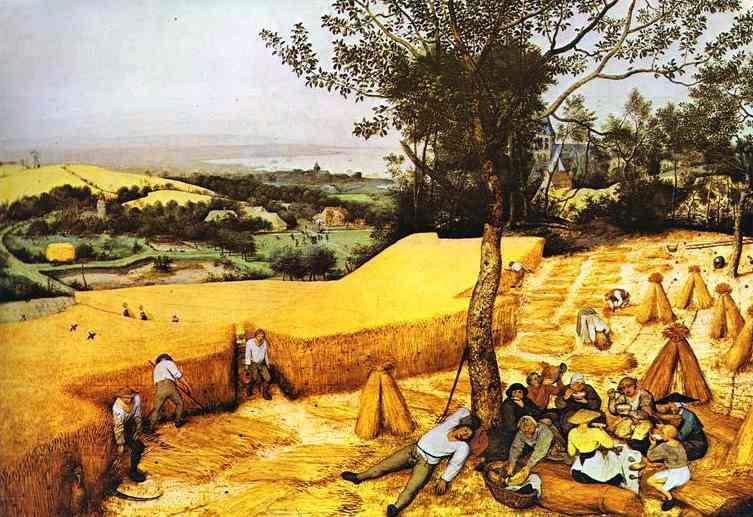
As with the gladness of harvest,
As men rejoice when they divide the spoil.


Chapter 8 left us with a picture of "distress and darkness, the gloom of anguish." (8:22) Thankfully, Isaiah's words continued directly into Chapter 9--and the news is brighter, literally!

To get through verse 1, we need to address some place names. Zebulun and Naphtali were two of the territories--part of the 12 tribal lands of Israel--on the border of Galilee (see map below), and those areas among the first to be invaded by Tiglath-pileser of Assyria.


"In the days of Pekah king of Israel, Tiglath-pileser king of Assyria came and captured Ijon and Abel-beth-maacah and Janoah and Kedesh and Hazor and Gilead and Galilee, all the land of Naphtali; and he carried them captive to Assyria."
--II Kings 15:29
 
As God would bring this warring nation to Judah, He first brought it to destroy Israel. The nation would not be a nation as it knew itself after its captivity. The people would be scattered. Times were truly dark. But what Isaiah's message says is that the gloom of this situation would not last; that God would, again, "make it glorious." The ultimate fulfillment of that prophecy has yet to be seen, as it will come with Christ's second coming. The foreshadowing of that fulfillment came with His first Advent.

"Now when Jesus heard that John had been taken into custody, He withdrew into Galilee; and leaving Nazareth, He came and settled in Capernaum, which is by the sea, in the region of Zebulun and Naphtali. This was to fulfill what was spoken through Isaiah the prophet:

The land of Zebulun and the land of Naphtali,
By the way of the sea, beyond the Jordan, Galilee of the Gentiles
The people who were sitting in darkness saw a great Light,
And those who were sitting in the land and shadow of death,
Upon them a Light dawned.”

From that time Jesus began to preach and say, Repent, for the kingdom of heaven is at hand.”
--Matthew 4: 12-17

One of the great blessings of studying Isaiah is seeing the direct relationship and fulfillment of so many of his prophecies--both in Old Testament and New Testament times. Matthew records the very Scripture we read today out of Isaiah 9, and Jesus lived out these recorded words in his ministry. This "great light" would be the Messiah, "the true Light which, coming into the world, enlightens every man." (John 1:9) The word of prophecy should have been a word of hope to a people in the darkness of captivity.

"In the worst of times God’s people have a nevertheless to comfort themselves with, something to allay and balance their troubles; they are persecuted, but not forsaken, sorrowful yet always rejoicing. And it is matter of comfort to us, when things are at the darkest, that he who forms the light and creates the darkness has appointed to both their bounds and set the one over against the other...."
 --Matthew Henry's Concise Commentary on the Bible
 
"You shall multiply the nation," says verse 3. This would have had significant meaning to Israel, as God was reaffirming the covenant that He made with Abraham: "...Indeed I will greatly bless you, and I will greatly multiply your seed as the stars of the heavens and as the sand which is on the seashore; and your seed shall possess the gate of their enemies." (Genesis 22:17) For a scattered people to not only see itself again as a nation but as a nation blessed by God should have been a comfort. There was hope for the exiled children, that this "seed" would "possess the gate of their enemies."

"We gather together to ask the Lord’s blessing;
He chastens and hastens His will to make known.
The wicked oppressing now cease from distressing.
Sing praises to His Name; He forgets not His own."
--We Gather Together, lyrics by Adrianus Valerius
 
There is an interesting section of verse 3. This is how it reads in the King James Version: "Thou has multiplied the nation, and not increased the joy...." (emphasis mine) At first, this would seem a little odd, especially in the context of what the rest of the passage is saying. If there's no more gloom, wouldn't joy be on the rise? It would be if it were the proper kind of joy.

"Yet it follows, Thou hast not increased the joy—the carnal joy and mirth, and those things that are commonly the matter and occasion thereof. But, notwithstanding that, they joy before thee; there is a great deal of serious spiritual joy among them, joy in the presence of God, with an eye to him."
--Matthew Henry

Isaiah does make comparisons to earthly gladness associated with this joy. It will be like the celebration over the gathering of the harvest or sharing the spoil of a victorious battle. The celebration will not be over the goodness of that gathered or gained, but, rather, in the One who enables the gathering and the victory; the One who brings forth and is true goodness! 

"Sowing in the morning, sowing seeds of kindness,
Sowing in the noontide and the dewy eve;
Waiting for the harvest, and the time of reaping,
We shall come rejoicing, bringing in the sheaves."
--Bringing in the Sheaves, lyrics by Knowles Shaw

In this season of Thanksgiving, let us remember that while we have much to be thankful for, we celebrate not that which we have, but give all glory, laud and honor to the One who has given beyond measure, by His grace unto us. And we shall come to Him, rejoicing!

"Make a joyful noise unto the Lord, all ye lands. Serve the Lord with gladness: come before his presence with singing. Know ye that the Lord he is God: it is he that hath made us, and not we ourselves; we are his people, and the sheep of his pasture. Enter into his gates with thanksgiving, and into his courts with praise: be thankful unto him, and bless his name. For the Lord is good; his mercy is everlasting; and his truth endureth to all generations."
--Psalm 100, King James Version


Happy Thanksgiving, friends!


"For a child will be born to us".... 'Til next Wednesday!


Photo: faithandworship.com; keyway.ca

* * *

Next week: Isaiah 9: 4-7

Note: I read from the New American Standard Bible translation,
specifically, The MacArthur Study Bible (NASB).
I will quote other sources if used in a post.

I also use
Strong's Exhaustive Concordance of the Bible
(with notes from the King James Version).


Wednesday, November 14, 2012

Isaiah 8: 19-22


19 When they say to you, “Consult the mediums and the spiritists 
who whisper and mutter,” should not a people consult their God?  
Should they consult the dead on behalf of the living?
20 To the law and to the testimony! 
If they do not speak according to this word, it is because they have no dawn.
21 They will pass through the land hard-pressed and famished, 
and it will turn out that when they are hungry, 
they will be enraged and curse their king and their God as they face upward.  
22 Then they will look to the earth, and behold, distress and darkness, the gloom of anguish; and they will be driven away into darkness.


Closing out Chapter 8 of Isaiah with another strong message through the prophet that gives us pause for today. Doing some "ghost-busting" (vs. 19)....
 
Before Israel became a divided kingdom, its first king, King Saul, had banished mediums and spiritists in obeying the law of God--since He would turn His face away from those nations who allowed consultations through them. Yet, when faced with a pending battle with the Philistines and having heard no word from God on how to handle the battle, the king takes matters into his own hands, going undercover into Philistine-controlled land and consulting--you guessed it--a medium for aid! To heap more problems upon himself, he assures the medium, "as the Lord lives," (I Sam. 28: 10) that she will not be in trouble, even as he asks her to call up the spirit of Samuel. What's really incredible is that God allows Samuel to been seen and heard, only for Samuel to give the king the message that his disobedience will cost him.

[Contrast this, again, to King Ahaz's situation, with God pulling out all the stops in endowing wisdom--prophet's words, validation of success, offer and presentation of a sign (of the Messiah, no less!)--yet no belief!! Is it any wonder God is frustrated with His human creation and their pursuance of their own will?]

As Scripture shows us time and time again, God's Word is ever-consistent. Should Isaiah or any other authority in Judah consult with mediums and spiritists? Should they consult with the dead in the hopes of attaining help? (vs. 19) Judah's King Manasseh, who came to rule after Isaiah's ministry, showed no regard for him [as tradition holds he had Isaiah sawn in two inside a hollow log] nor his bringing God's Word to light.

"He [Manasseh] made his son pass through the fire, practiced witchcraft and used divination, and dealt with mediums and spiritists. He did much evil in the sight of the Lord provoking Him to anger.... ...Manasseh seduced them [Judah] to do evil more than the nations whom the Lord destroyed before the sons of Israel."
--II Kings 21:6 and 9

So, when there is trouble, who ya gonna call? "To the law and to the testimony!" (vs. 20) Last week, we read God's word to Isaiah to "bind up the testimony [or teaching], seal the law among my disciples." (8:16) We are not advised to go to the [spiritually or otherwise] dead for guidance. We should seek out the living--those who live and walk in the Light, the light of God's teaching! Isaiah would carry that Light through his ministry to those would listen, to those who "had ears to hear," as the New Testament would say. The remnant of believers. Because, those who did not follow the testimony, "have no dawn." (vs. 20) There is no light that rises in them, no dayspring. [Hebrew definitions from Strong's]

"O come, Thou Day-Spring, come and cheer
Our spirits by Thine advent here
Disperse the gloomy clouds of night
And death's dark shadows put to flight.
Rejoice! Rejoice! Emmanuel
Shall come to thee, O Israel."

--Lyrics from "O Come, O Come Emmanuel"

"Those will never be drawn to consult wizards that know how to make a good use of their Bibles."
--Matthew Henry's Concise Commentary on the Bible
 

For Judah, the consequences that follow God's judgment are again outlined in these last verses, with an Assyrian invasion leaving their once-rich land in a state of depravity, resulting in hard times and famine (vs. 21). Instead of looking to their own disobedience, they will blame their king; they will blame "their" God. But, in the end, the darkness is in and of themselves, and "they will be driven away into darkness" (vs. 22) as exile in Babylon will offer them no relief.

Go beyond the historical facts, though, won't you? This "hunger" and "darkness" refer as much to one's current spiritual state and future spiritual welfare as it does to what Isaiah's prophecy means to Judah's immediate future of the day. Without a relationship with the Lord, one will walk through life hungering, because something is missing in the heart (often referred to as "a God-shaped hole"). Until we recognize that only One can fill what is missing, we will be missing out on the abundant life that He has given to us. Indeed, there is no rest.

"Those that go away from God go out of the way of all good. They shall be very uneasy to themselves, by their discontent and impatience under their trouble. A good man may be in want, but then he quiets himself, and strives to make himself easy; but these people when they shall be hungry shall fret themselves, and when they have nothing to feed on their vexation shall prey upon their own spirits; for fretfulness is a sin that is its own punishment."
--Matthew Henry

Out-of-control anxiety leads to frustration, anger, blaming, lawlessness. [Read the Book of James and see how trouble can build up and over out of a conflicted heart.]

Not only do we face dark times in our lives, but the darkest time is yet to come. Isaiah's prophecy will apply to the coming Day of the Lord.

"Alas, you who are longing for the day of the Lord,
For what purpose will the day of the Lord be to you?
It will be darkness and not light...."
--Amos 5:18

For the Jews, the Pharisees, notably, the Lord's return meant salvation was coming. But, as Jesus tried to teach them through a parable, salvation had already come! Yet, they had not believed. They had not listened and heard and understood the words of the prophets. Cross-reference searches on today's passages led me to Luke 16: 19-31, Jesus' parable of the rich man and Lazarus (not the one Jesus raised from the dead). Please click on that link and read this story. I felt as though it was one I had never read. It is as much a story for the Judah of Isaiah's day as it is a story for this minute!

The opportunity to know God through a relationship with His Son, the Messiah who has come and will come again, and through God's Word in the Bible is here right now. May we take Isaiah's words to heart--to know, accept and live "the law and the testimony"--lest we continue to "live" in the dark and die to the dark.

"But Abraham said, ‘Child, remember that during your life you received your good things, and likewise Lazarus bad things; but now he is being comforted here, and you are in agony. And besides all this, between us and you there is a great chasm fixed, so that those who wish to come over from here to you will not be able, and that none may cross over from there to us.’

And he said, ‘Then I beg you, father, that you send him to my father’s house—for I have five brothers—in order that he may warn them, so that they will not also come to this place of torment.’ But Abraham said, ‘They have Moses and the Prophets; let them hear them.’

But he said, ‘No, father Abraham, but if someone goes to them from the dead, they will repent!’

But he said to him, ‘If they do not listen to Moses and the Prophets, they will not be persuaded even if someone rises from the dead.'"
--Luke 16: 25-31


"Then Jesus again spoke to them, saying, 'I am the Light of the world; he who follows Me will not walk in the darkness, but will have the Light of life.'"
--John 8:12


"Birth and Reign of the Prince of Peace"--O Happy Day! Starting Chapter 9.... 'Til next Wednesday!


Photo: redmercuri.com

* * *

Next week: Isaiah 9:1-3

Note: I read from the New American Standard Bible translation,
specifically, The MacArthur Study Bible (NASB).
I will quote other sources if used in a post.

I also use
Strong's Exhaustive Concordance of the Bible
(with notes from the King James Version).


Wednesday, August 8, 2012

Isaiah 5: 26-30


26 He will also lift up a standard to the distant nation,
And will whistle for it from the ends of the earth;
And behold, it will come with speed swiftly.
27 No one in it is weary or stumbles,
None slumbers or sleeps;
Nor is the belt at its waist undone,
Nor its sandal strap broken.
28 Its arrows are sharp and all its bows are bent;
The hoofs of its horses seem like flint and its chariot wheels like a whirlwind.
29 Its roaring is like a lioness, and it roars like young lions;
It growls as it seizes the prey
And carries it off with no one to deliver it.
30 And it will growl over it in that day like the roaring of the sea.
If one looks to the land, behold, there is darkness and distress;
Even the light is darkened by its clouds.


We conclude Isaiah, Chapter 5, far from the beautiful vineyard that opened this chapter. This reads more like a scene out of "Braveheart" than "A Walk in the Clouds."

Last time, we talked about God's hand being in total control of this situation. The judgment and consequences facing Judah were His doing. He would "lift up a standard,"--a flag, sail or sign [Strong's]--to a "distant nation." A signal flare of sorts was fired to a nation that was not part of Israel--likely, forces from the Assyrian Empire. ("These would be Syria, Assyria, Babylon, etc. The imperial Assyrian army was composed of mercenaries hired from all over the Assyrian Empire."--Reformation Study Bible). Strong's includes one more definition in an explanation of the Hebrew for 'standard'--token. God was handing off Judah as if someone were receiving a token for a high score in an arcade game. Here, catch....

"'Because you did not serve the Lord your God with joy and a glad heart, for the abundance of all things; therefore you shall serve your enemies whom the Lord will send against you, in hunger, in thirst, in nakedness, and in the lack of all things; and He will put an iron yoke on your neck until He has destroyed you. 'The Lord will bring a nation against you from afar, from the end of the earth, as the eagle swoops down, a nation whose language you shall not understand....'"
--Deuteronomy 28: 47-49
Verse 26 says that God will "whistle" for this armament. This whistle is not a still small voice as Elijah would have heard in recognizing God. Again looking at the Hebrew, the word means "to be shrill, i.e., to whistle or hiss (as a call or in scorn)." [Strong's] More like the tea kettle at high boil kind of whistle! Or a hissing that would have sounded like a bee, as Assyria was noted for its bees. [International Standard Bible Encyclopedia] And once the call was issued, the forces would come "with speed swiftly," which certainly emphasizes the point.

Isaiah takes the next several verses to describe the army. Verse 27 describes a group dressed for battle with nothing of strength out of place. Not a one weary, stumbling, or sleepy. The phrasing chosen here reminds me immediately of Psalm 121: "He who keeps you will not slumber. Behold, He who keeps Israel will neither slumber nor sleep." (verses 3b and 4) The Lord was lifting up an army with Divine might.

"If God set up his standard, he can incline men’s hearts to enlist themselves under it, though perhaps they know not why or wherefore. When the Lord of hosts is pleased to make a general muster of the forces he has at his command, he has a great army in an instant...."
--Matthew Henry's Concise Commentary on the Bible

The army of total preparedness has perfect equipment as well. Bows and arrows, groomed and at the ready. Horses with hooves that "seem like flint," (verse 28) meaning of great hardness, so that they would be prepared to ride the miles and withstand the attack to come. Their chariots would kick up the dust, as if a "whirlwind." It is with the reference to chariots that some commentaries I read suggested this entire passage might also refer to other times of judgment and invasion, such as the emergence of the Roman Empire. More on this thought in a moment....

Verse 29 goes figurative, as the invading force takes on the persona of a roaring lion. Isaiah describes the take-over of Judah as if a lion attacking its prey. It begins with a commanding roaring, moves to a satisfying growl, the seize and, finally, the unchallenged escape. Babylon invaded Jerusalem in 586 B.C., destroying the temple and leading a host of Jews back to exile. If only Isaiah's words had sounded to God's people as a roaring lion.

"Those who would not hear the voice of God speaking to them by his prophets, but stopped their ears against their charms, shall be made to hear the voice of their enemies roaring against them and shall not be able to turn a deaf ear to it."
--Matthew Henry

Finishing up with verse 30 out of the King James Version:

"And in that day they shall roar against them like the roaring of the sea: and if one look unto the land, behold darkness and sorrow, and the light is darkened in the heavens thereof."

The idea of Scripture being applicable in more than one place and time (Assyrian Empire; Roman Empire; End Times) shouldn't surprise us. This is a living, active word! (Hebrews 4:12) Surely, in the exile of Judah and the destruction of the temple, there would be darkness in the heavens. I know what you're thinking, though: This was at God's hand! He could have intervened, done something different. But, as I hope we've learned from the little of Isaiah that we have tackled so far, we are talking about a people that had turned so far away from God that drastic measures were necessary. And, truly, when you read passages in Deuteronomy, like Chapter 28, this was the punishment to fit the disobedience. No surprises here!

It is hard to see this as a "tough love" situation, but, through discipline, God was trying to reach them and bring them back to Himself. This is a way He shows His love for us. And a time was coming in which there would be the greatest showing of His love ever known. Yet, history repeats itself....


"In him was life; and the life was the light of men. And the light shineth in darkness; and the darkness comprehended it not."
--John 1: 4 and 5

The "darkness" did not understand, but led the true Light of the world to the cross. "And if one look unto the land, behold darkness and sorrow, and the light is darkened in the heavens thereof."

"It was now about the sixth hour, and darkness fell over the whole land until the ninth hour, because the sun was obscured...."
--Luke 23: 44-45a

"...The earth shook and the rocks were split. ...When they saw the earthquake and the things that were happening, became very frightened and said, 'Truly this was the Son of God!'"
--Matthew 27: 51-54 (excerpts)

THINGS HAPPEN in the presence of God, even as the heavens are darkened and saddened at the will of those who do not see. Might we hear the roaring cry of the prophets, the roaring cry of our Savior--the Lion of Judah [How about that flip on a metaphor!?]--so that we will not continue to walk in darkness, but have the light of life? (John 8:12)

Before that Day of the last roaring?


"'There will be signs in sun and moon and stars, and on the earth dismay among nations, in perplexity at the roaring of the sea and the waves, men fainting from fear and the expectation of the things which are coming upon the world; for the powers of the heavens will be shaken.'"
--Luke 21: 25 and 26 (Jesus speaking


How Isaiah became a prophet. Chapter 6 begins.... 'Til next Wednesday!


Photo: twistedsifter.com


* * *

Next week: Isaiah 6: 1-3

Note: I read from the New American Standard Bible translation,
specifically, The MacArthur Study Bible (NASB).
I will quote other sources if used in a post.

I also use
Strong's Exhaustive Concordance of the Bible
(with notes from the King James Version).


Wednesday, July 25, 2012

Isaiah 5: 18-23


18 Woe to those who drag iniquity with the cords of falsehood,
And sin as if with cart ropes;
19 Who say, “Let Him make speed, let Him hasten His work, that we may see it;
And let the purpose of the Holy One of Israel draw near
And come to pass, that we may know it!”
20 Woe to those who call evil good, and good evil;
Who substitute darkness for light and light for darkness;
Who substitute bitter for sweet and sweet for bitter!
21 Woe to those who are wise in their own eyes
And clever in their own sight!
22 Woe to those who are heroes in drinking wine
And valiant men in mixing strong drink,
23 Who justify the wicked for a bribe,
And take away the rights of the ones who are in the right!


The last of the six woes come in today's passage of Isaiah 5. They read like proverbs, and, not surprisingly, many of the cross-references for our verses do link back to the Book of Proverbs. They are pretty self-explanatory, as one would expect a proverb to be. Appreciating the punch and poetry of Isaiah!....


  • Woe #3 (vs 18): Useless flaunting with brazen mocking

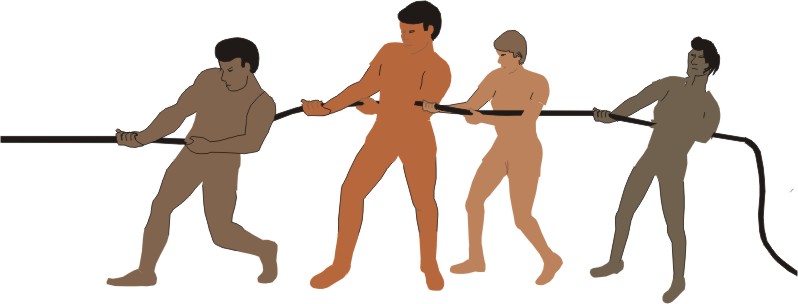
The visual imagery is terrific. While a cord of three strands is not quickly broken apart (Ecclesiastes 4:12), a cord of falsehood (worthlessness; uselessness; vanity, in other translations) is snipped with ease.

"The Lord is righteous; He has cut in two the cords of the wicked."
--Psalm 129:4
Judah is not only characterized as being blatantly sinful, but it has made great effort, as dragging something of weight and heft, to make sure its sinful lifestyle is being maintained--for all to see! As if their pursuit of sin is not enough, the people do so mocking God with every step. Look at verse 19: "...Let the purpose of the Holy One of Israel draw near...." That name for God that Isaiah has used and will use in his prophecy is here used as if by a taunting "I-dare-ya" grade-schooler. "You've got judgment for us? Bring it on!" Guess they forgot about what it says in Deuteronomy 6--what our Lord later quotes in the Gospels--about putting God to the test. Not sure those thoughts aren't still out there.

"Know this first of all, that in the last days mockers will come with their mocking, following after their own lusts, and saying, 'Where is the promise of His coming? For ever since the fathers fell asleep, all continues just as it was from the beginning of creation.'"
--II Peter 3: 3 and 4
 

  • Woe #4 (vs 20): Ill-thought substitutions

Sometimes [OK, a lot of times!], when I'm cooking, I will have to make a change in the recipe I'm following. That item I thought was in the pantry, fridge or spice rack just isn't there when I reach for it. Time for a last-minute substitution [or deletion!] There are times when you can whip up missing ingredients from other sources or else choose to alter your dish's flavor profile with something different. And, then, there are times when you make an ingredient substitution and you just get it wrong! It's not just distasteful--literally. It's more likely trash-bound. This is God's point.

When you "call evil good and good evil," you get it wrong! It's not just confusing, it's what Proverbs 17:15 calls "an abomination to the Lord." To how many things can we look at in our society today and apply this thought? Something that was once an "evil" that, over time, with insistent persuasion and re-framing (as if "dragging iniquity with cords of falsehood," perhaps?) has become something perfectly acceptable?


"'The eye is the lamp of the body; so then if your eye is clear [healthy, sincere], your whole body will be full of light. But if your eye is bad, your whole body will be full of darkness. If then the light that is in you is darkness, how great is the darkness!'"
--Matthew 6: 22 and 23


Judah's spiritual blindness had led the nation into a dark period of its history, indeed!


  • Woe #5 (vs 21): "Wise in their own eyes"

If my Mom is reading today, she is nodding her head up and down, with maybe even a little "uh-huh" thrown in. I do, now, understand about this, being a parent myself. We spend our lives learning--actively or passively, well or not so much. But it is over the entire course of our lives. Yet true wisdom is not something we can inherit or pursue on our own.

"Let no man deceive himself. If any man among you thinks that he is wise in this age, he must become foolish, so that he may become wise. For the wisdom of this world is foolishness before God. For it is written, 'He is the one who catches the wise in their craftiness'; and again, 'The Lord knows the reasonings of the wise, that they are useless.'"
--I Corinthians 18: 18-20


Bottom line: We fall short! Surprise--not. Our best reasoning is not good enough to be considered wisdom. We just don't have it all. But, God's people thought they were wise enough to think and to stand for themselves. We all get caught up in the deception that we can be wise on our own, yet, enough living in the world will show you how "useless" this thinking is. Just not smart! Love how Matthew Henry put it in his commentary: "...They think themselves able to disprove and baffle the reproofs and convictions of God’s word, and to evade and elude both the searches and the reaches of his judgments; they think they can outwit Infinite Wisdom and countermine Providence itself." Back to the hits of 1979....

"What a fool believes he sees  
No wise man has the power to reason away  
What seems to be is always better than nothing  
There's nothing at all but what a fool believes he sees...."
--Doobie Brothers
  • Woe #6 (vs 22): "Drunkin' bribin' judgin'"


Don't drink and bribe! As if bribing a judge in and of itself was not enough of an issue, mix in impaired judgment to your bringing your bribe to a judge. It was working in Judah, and God had had His fill. 

In all seriousness, there is quite a list of cases in which the rights of the righteous ones have been denied. How long, yes? How long.... There are hearts pained with grief, horror and bitterness over seeing righteousness "lose." Is this woe still "on the books"? Does God let righteousness lose? Though James repeats that the unrighteous "...have condemned and put to death the righteous man...." (James 5:6), he also teaches us what to do--looking to prophets, like Isaiah, as role models.
 
"You too be patient; strengthen your hearts, for the coming of the Lord is near. Do not complain, brethren, against one another, so that you yourselves may not be judged; behold, the Judge is standing right at the door. As an example, brethren, of suffering and patience, take the prophets who spoke in the name of the Lord. We count those blessed who endured. You have heard of the endurance of Job and have seen the outcome of the Lord’s dealings, that the Lord is full of compassion and is merciful."
--James 5: 8-11 (italics mine)

"Therefore...." There's that word again! God explains what's coming down in the face of judgment.... 'Til next Wednesday!


Photo: gamesmuseum.uwaterloo.ca


* * *

Next week: Isaiah 5: 24 and 25

Note: I read from the New American Standard Bible translation,
specifically, The MacArthur Study Bible (NASB).
I will quote other sources if used in a post.

I also use
Strong's Exhaustive Concordance of the Bible
(with notes from the King James Version).